Shockwave Therapy in Lexington, KY
Extracorporeal shockwave therapy (ESWT): an evidence-backed tool for the tendon and soft tissue problems that refuse to heal.
What is shockwave therapy?
Officially called extracorporeal shockwave therapy (ESWT), the treatment delivers acoustic energy waves into injured tissue. The waves create controlled microtrauma that stimulates the body's own healing mechanisms: regenerative cells migrate to the area, vascularization improves, and nerve regeneration is enhanced. It is FDA-cleared for the treatment of acute and chronic musculoskeletal pain and connective tissue disorders.
What conditions does shockwave treat?
- Plantar fasciitis (heel pain)
- Tennis elbow
- Rotator cuff and calcific tendinitis of the shoulder
- Achilles tendinopathy
- Jumper's knee
- Peripheral neuropathy
What does a session look like?
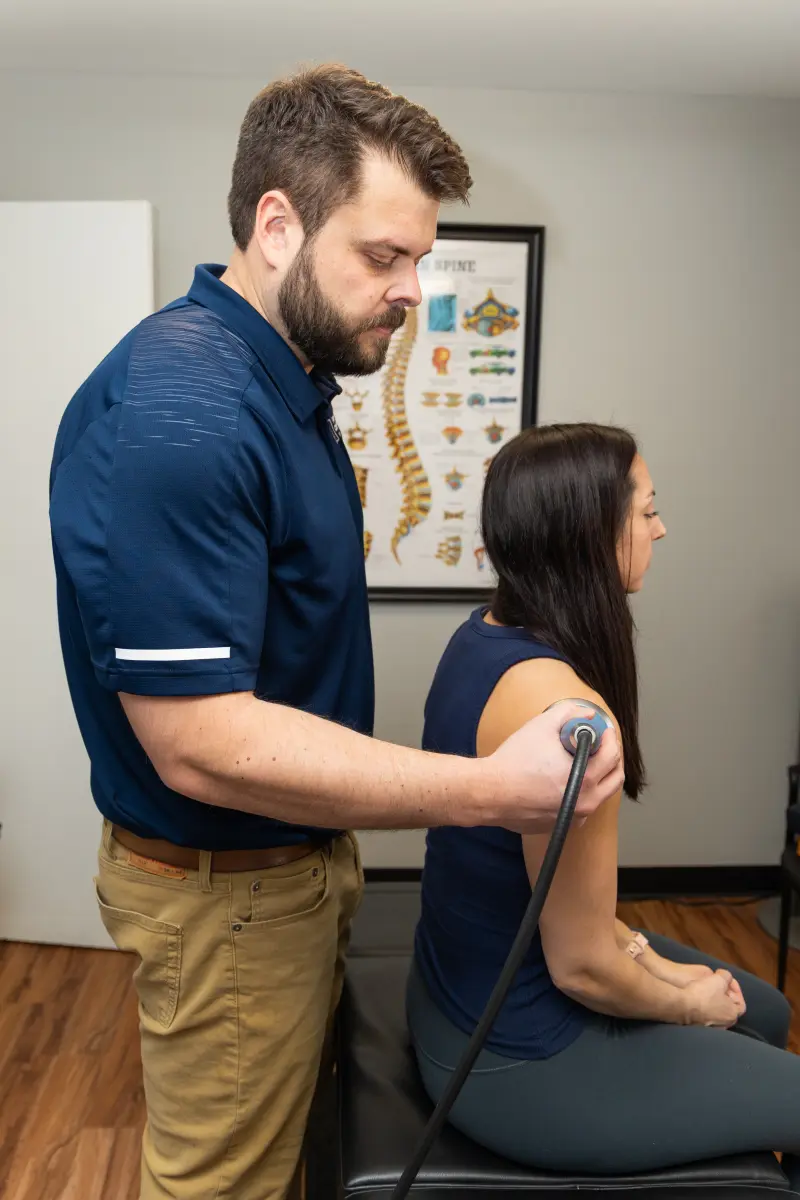
We locate and mark the source of pain, apply a contact gel, and deliver a prescribed number of pulses through a handpiece directly over the area. Sessions are quick, require no anesthesia or downtime, and are typically scheduled as a short weekly series.
What does the research show?
Published clinical studies have generally reported success rates in excess of 75 percent for the tendinopathies shockwave treats best. The Journal of Orthopaedic Research (2005) recorded 90 percent improvement for plantar fasciitis and a 77 percent success rate for tennis elbow treated with radial shockwave. Your response is tracked against objective benchmarks, the same as every treatment in this office.
What about Class IV laser?
Alongside shockwave, we offer high-power Class IV laser therapy (photobiomodulation), which reduces inflammation and accelerates cellular repair. Dr. Pelphrey has completed formal post-graduate training in both ESWT and Class IV laser, and will tell you plainly which tool, if either, fits your diagnosis.
Frequently asked questions
Does shockwave therapy hurt?
Treatment is intense but tolerable: most patients describe rhythmic pulses with some tenderness over the injured spot, settling as the session goes. There is no anesthesia and no downtime; mild soreness afterward is normal and short-lived.
How many shockwave sessions will I need?
Most tendon conditions are treated as a short weekly series, commonly three to six sessions. Because shockwave works by provoking a healing response, improvement often continues for weeks after the series ends, and your response is tracked against objective benchmarks.
Is shockwave therapy FDA-cleared?
Yes. Extracorporeal shockwave therapy is FDA-cleared for the treatment of acute and chronic musculoskeletal pain and connective tissue disorders.
What is the success rate of shockwave therapy?
Published clinical studies have generally reported success rates in excess of 75 percent for the tendinopathies shockwave treats best, including findings of 90 percent improvement for plantar fasciitis and 77 percent for tennis elbow in the Journal of Orthopaedic Research (2005).
Shockwave or Class IV laser: which do I need?
They work differently: shockwave mechanically provokes healing in stubborn tendon tissue, while Class IV laser reduces inflammation and supports cellular repair more broadly. The examination decides, and some cases benefit from both in sequence.
There may be hope for that stubborn injury.
A short evaluation tells us whether shockwave or laser is the right tool for your case.