
Frozen Shoulder Treatment in Lexington, KY
Adhesive capsulitis can take years to resolve on its own. The goal of care is to shorten that timeline and keep your motion while it heals.
What is frozen shoulder?
Frozen shoulder, medically called adhesive capsulitis, happens when the capsule of connective tissue surrounding the shoulder joint becomes inflamed and then contracts. The result is a shoulder that first aches deeply, then stiffens until everyday motions, reaching a shelf, fastening a seatbelt, sleeping on that side, become difficult or impossible. It typically moves through three stages: freezing (painful), frozen (stiff), and thawing (gradual return of motion), and the untreated course can run one to three years.
How do we treat frozen shoulder?
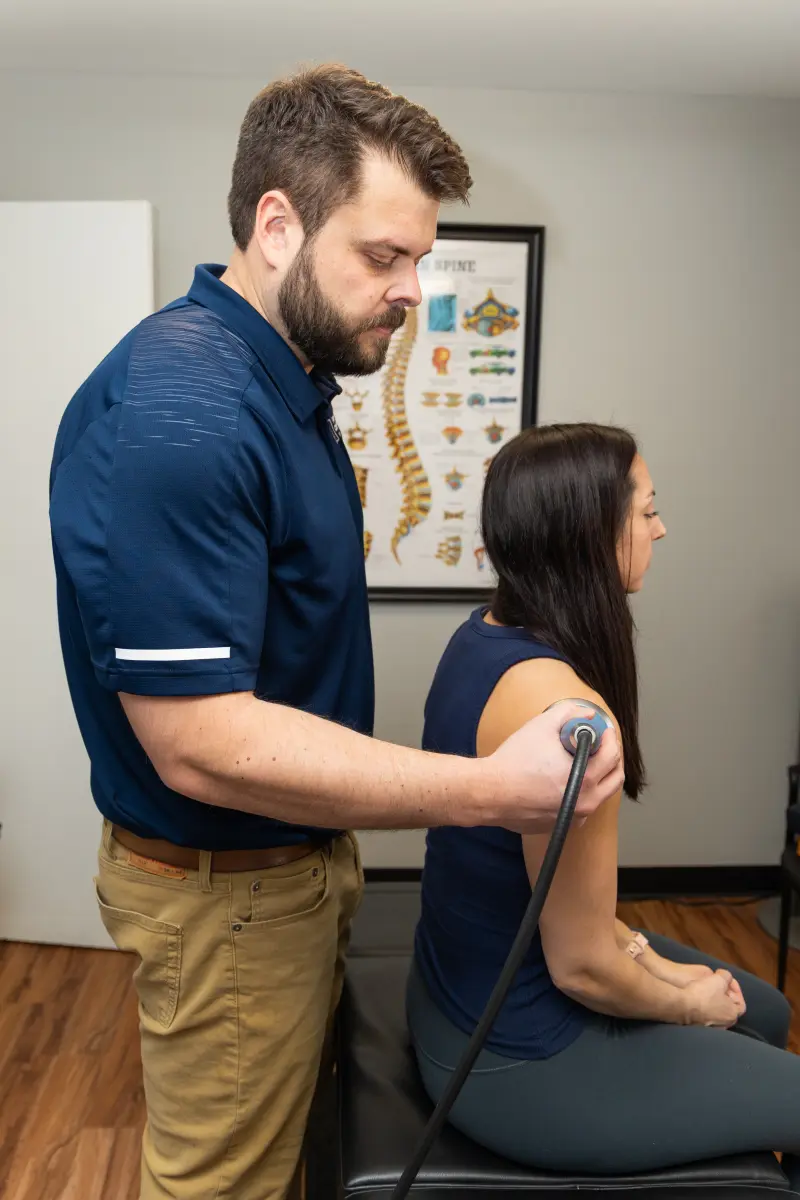
- Shockwave therapy delivers acoustic energy into the contracted capsule and surrounding tissue to stimulate the healing response and reduce pain.
- Class IV laser calms the capsular inflammation that drives the freezing stage, especially the night pain.
- Guided mobility work preserves and reclaims range of motion within what the healing tissue tolerates, progressed as the shoulder thaws (see corrective exercise).
Progress is measured, not guessed: your range of motion is recorded at the start and re-checked through care, so you can see the shoulder opening back up on paper as well as feel it.
Why not just wait it out?
Because the frozen stage is self-reinforcing. The less the shoulder moves, the more the capsule shortens, and the habits you build to avoid pain, hiking the shoulder, leaning away, overusing the other arm, create their own neck and upper back problems. Most patients who wait describe the same regret: they lost a year they did not need to lose.
Frequently asked questions
What is frozen shoulder?
Frozen shoulder, or adhesive capsulitis, is inflammation and tightening of the capsule that surrounds the shoulder joint. It typically moves through three stages: a painful freezing stage, a stiff frozen stage, and a gradual thawing stage, and left alone the full course can run one to three years.
Why does my shoulder hurt more at night?
Night pain is a hallmark of the freezing stage. Lying on the shoulder compresses the inflamed capsule, and without the distractions of the day the deep ache becomes more noticeable. Pain that keeps waking you is a reason to be evaluated, not to wait.
Can treatment really speed up frozen shoulder?
The goal of care is to calm the inflamed capsule, keep as much motion as possible, and shorten the stiff phase rather than wait it out. We combine shockwave therapy and Class IV laser with guided mobility work, and track your range of motion objectively so you can see whether it is working.
How is frozen shoulder different from a rotator cuff problem?
A rotator cuff problem usually hurts with specific movements but allows near-full motion when someone else moves your arm for you. Frozen shoulder restricts motion in every direction, even passively. The examination tells them apart, and the treatments differ, so the diagnosis matters.
Do I need an MRI for frozen shoulder?
Usually not. Frozen shoulder is primarily a clinical diagnosis made from your history and examination. Imaging comes in when findings suggest something else, such as a significant rotator cuff tear, and Dr. Pelphrey refers cases out when they need a different kind of care.
Don't give frozen shoulder a year of your life.
An examination tells us the stage, the plan, and the realistic timeline. New patients are welcome.